Posted: May 15th, 2017 | Author: Malla Poikela | Filed under: Events, Uncategorized | Tags: Catalyst, customer experience, Digital Customer Journey, TM Forum Live! | Comments Off on Comptel at TM Forum Live! 2017: Showcasing Sponsored Data and Predictive Customer Journeys
Follow the customer, not the competitor. That’s the way it should work.
However, many operators struggle to find the right service, marketing or monetisation strategies to engage and excite their customers. Customer-centric strategy is now more important than ever, at a time when consumers demand better levels of service, attention and instant gratification from their operators across their whole customer journey. Customers are always on the journey and operators should be able to provide a personalised and consistent customer experience.
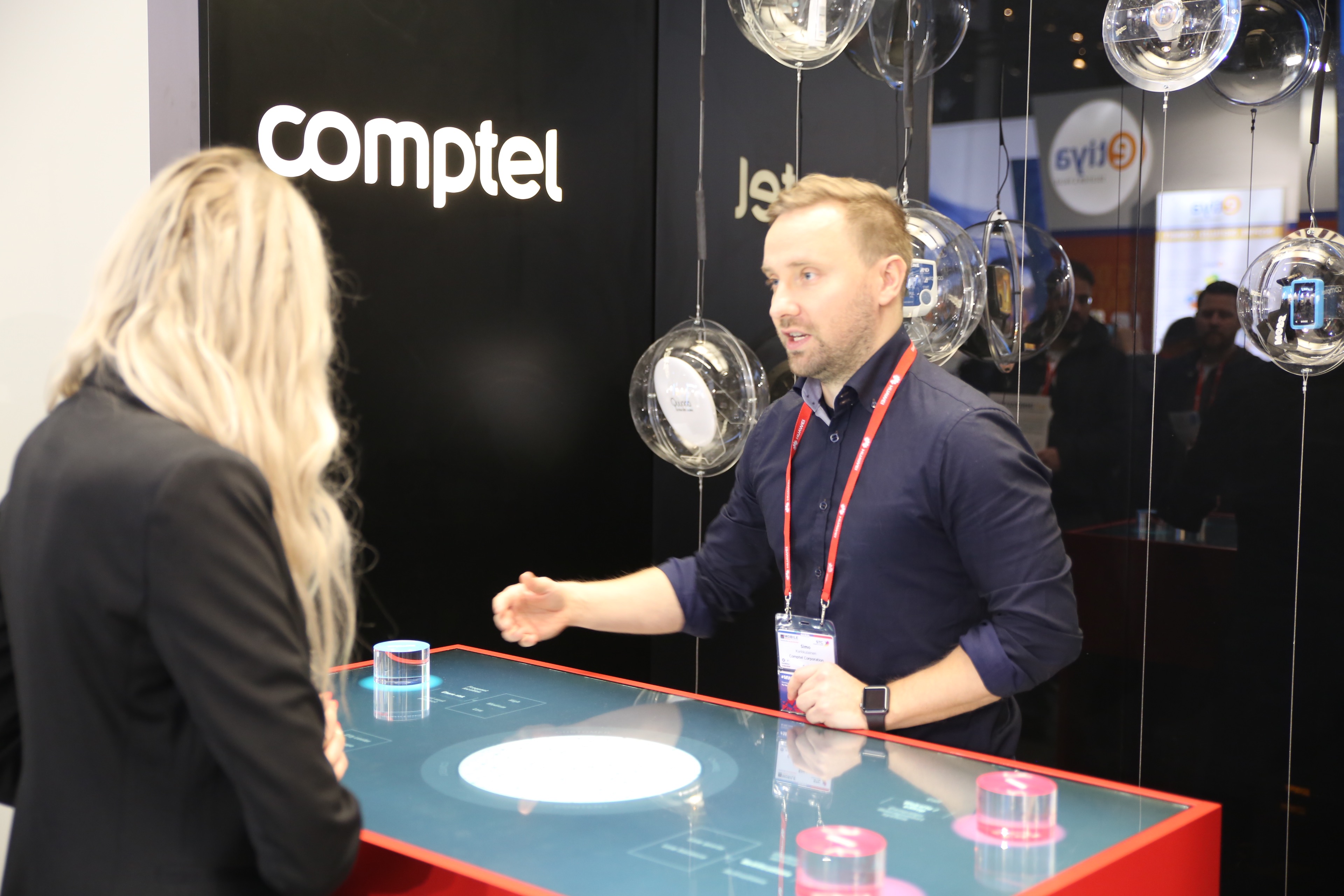
Comptel is working to help operators solve key customer challenges to improve customer experience at every touch point of their omnichannel journey, and we’ll demonstrate the fruits of our efforts at TM Forum Live! 2017 in Nice, France, 15-18, May 2017. We are proud to once again contribute to two TM Forum Catalysts, which are proof-of-concept initiatives that bring together large and small digital and communications service providers and other ecosystem players to develop innovative solutions for common industry challenges.
Both Catalysts provide strategies that help operators meet customer demands and add new revenue opportunities through improved engagement. If you’re in Nice for the event, we encourage you to stop by the Catalyst Theatre to learn about both initiatives. Here’s a preview.
New Business Models with Mobile Sponsored Data
Championed by Orange and NTT, this Catalyst also includes Datami, CloudSense and Sigma. Building on the success of our 2016 presentation, we aim to give operators the detailed blueprint they need to turn current sponsored data trials into complete market offerings.
Customers love using their mobile data for ecommerce, stream videos and play online games, but they’re afraid to engage in such activities that eat up their data plan. By allowing a third party to pay for data access, sponsored data programs remove the financial barriers that prevent mobile users from engaging. It’s a great incentive to improve customer engagement, build loyalty and drive revenue.
The Catalyst on Sponsored Data will take place at 16:30 pm on Monday, May 15 in the Catalyst Theatre.
Maximising Engagement with Predictive Customer Journeys
Championed by Orange, Ncell and ArtofArc, Comptel creates predictive customer journeys together with Salesforce, Vlocity, Huawei, Teavaro and Comarch. It’s important for operators to engage with customers at every level and channel of the buying journey, especially those customers who engage self-service shopping. Customer journeys are inherently omnichannel by nature, thus we need better insight into the real-time customers’ digital moments to find the right context to engage.
Customers crave this type of service – our recent research survey found 55 percent want more personalised engagements from their mobile carriers. Our Catalyst will provide the blueprint for operators to reach and motivate customers with those personalised, customised offers.
The Catalyst on Predictive Customer Journeys will take place at 15:00 pm on Tuesday, May 16 in the Catalyst Theatre.
We received so much positive feedback from last year’s Catalysts, and our Sponsored Data partnership was even recognized by TM Forum as the “Most Innovative Catalyst – Commercial Applications in Communications Industry” in its 2016 Catalyst Awards. We hope to make a similarly big impact this year, and look forward to sharing our ideas with guests in Nice.
Visit TM Forum’s Catalyst Theatre to see these demonstrations in action. To arrange a meeting with Comptel at TM Forum Live! 2017, email [email protected]
Download a copy of the Comptel research report “The Power of Personal” to learn more about changing consumer attitudes toward personalised services.
Posted: May 10th, 2017 | Author: Malla Poikela | Filed under: Industry Insights | Tags: artificial intelligence, customer experience, FASTERMIND, Next Best Engagement, salesforce | Comments Off on Comptel and Salesforce Empower Digital Omnichannel Experience with Next Best Engagement Solution
In today’s omnichannel world, the digital customer journey often begins online or on a mobile device, but is later completed in person, over the phone, or through a different digital channel. In fact, even though most customers start their journey online, 69 percent of customers turn to retail stores to complete their purchase.
Telcos have a vast amount of customer data at their fingertips, and yet most digital communication service providers still lack the ability to connect the dots throughout the digital customer journey. To solve this issue, Comptel introduced the Next Best Engagement solution with Salesforce, which will empower the omnichannel customer journey for digital telcos, during this year’s Mobile World Congress.
The Next Best Engagement solution is powered by Comptel’s Fastermind, which recommends, predicts and automates real-time decisions for the most suitable actions in a customer’s journey. By combining Fastermind’s applications for digital telcos and the Salesforce Marketing, Sales, Service and Community clouds’ capabilities, the Next Best Engagement solution allows operators to recommend and trigger actions that enable more personalised marketing and sales opportunities and more responsive customer care.
Filling the Gaps in the Digital Customer Journey
There are many major chasms in the digital customer experience that Next Best Engagement can help address. For example, mobile providers struggle to identify customers who are both an individual retail customer, as well as a customer on a business plan through their employer. Similarly, they are also unable to recognise when a customer begins the customer journey online and later calls or enters a brick-and-mortar store to continue that same process.
These are major shortcomings for telco service providers, as Generation Cloud customers – whether B2B or B2C – expect personalised, contextual, and seamless experiences across all touchpoints. For example, if a customer walks into a retail store, it’s important for the service provider to know where that individual left off in the journey so that they can offer them a personalised experience and entice them to complete their path to purchase.
Next Best Engagement helps improve interactions at each stage in the customer journey, as operators reach customers through multiple sales transactions, product interactions and service engagements. Utilising data from each of these interactions, the solution can provide the real-time intelligence operators need to maximise each touchpoint, fostering long-term loyalty through personalised service.
Proactive, Personalised, Contextual Recommendations
As Comptel’s Power of Personal research found, 55 percent of mobile customers are interested in receiving personalised, proactive service offerings from their mobile provider. However, operators are missing a huge opportunity here, as only 13 percent of customers are actually receiving these offers. Next Best Engagement with Comptel’s Fastermind and Salesforce’s leading customer engagement platforms is able to predict, recommend and automatically trigger full-blown personalised journeys in the Salesforce Marketing Cloud.
Not only does this enable operators to offer proactive and personalised experiences consistently, but based on the analysis, it helps target the right customers with the right services, at the right time. Even though customers are open to receiving new offers from mobile providers, if it is not provided in the right time or place, then it will likely be ignored.
By combining proactive service offerings with the appropriate context, telcos can acquire new customers and reduce churn with current customers who engage with service providers across multiple channels throughout the digital customer journey. With Next Best Engagement, telcos will ultimately be able to anticipate the fastest and most personal way to offer customers what they need, when they need it, through the most convenient channel for them.
Comptel will showcase the Next Best Engagement solution as a part of the “Maximising Engagement with Predictive Customer Journeys” Catalyst with Salesforce at TMForum Live! in Nice on May 15-18, 2017. Book a meeting with Comptel at TMForum Live! by emailing [email protected].
Posted: April 4th, 2017 | Author: Malla Poikela | Filed under: Industry Insights | Tags: A-Claim, customer experience, digitalisation, insurance | Comments Off on The Digital Insurer Offers Customers Instant Gratification
Unfortunately, unlucky incidents happen. To limit the consequences, we can insure ourselves against those incidents. But, once we file a claim, it can take time for an insurance company to process it and determine compensation. Imagine if, instead, you’d submit your claim – about a broken windscreen or stolen camera or water damage caused by your dishwasher – and receive an instant claim decision.
Of course, that’s generally not how it works now. Many consumers have had to deal with insurance companies after a sudden and unfortunate incident, and most probably would not describe their experience as smooth, fulfilling or gratifying.
In reality, the quality of service offered by most insurance companies does not match the expectations of today’s cloud generation customers. Consumers want everything they do – from shopping online, to upgrading a phone plan, to mobile banking – to be an easy, fast and frictionless process. That also applies to insurance claims.
The existing insurance claim handling process is out-dated: half-digital, half-automated, labour-intensive and bureaucratic. A halfway approach serves neither the policyholder nor the insurer, and the result is slow and expensive claims processing with delayed compensation decisions.
An ideal process delivers instant gratification. When a policyholder submits an insurance claim, that action should trigger a real-time and automated claims decision, with the outcome immediately communicated back to the policyholder. As a result, today’s digitally savvy and mobile-first policyholders benefit from swift claims handling, communication and compensation, leading to instant gratification.
So, how can insurance companies offer that type of experience?
Just like we’ve seen with operators in the telecommunications industry, insurers are on a journey to become digital service providers. They’re looking for new strategies and technologies that can help them better serve demanding digital customers. According to McKinsey & Company, one U.S. insurer expects 40 percent of its new business in the next 3-5 years to come through online and mobile channels – an indicator that insurance companies at large need to be more in tune with digital experiences.
By fast-tracking and automating claim decision-making, communication and compensation, insurance companies can take a major step toward digital transformation – and toward becoming true digital insurers.
Comptel can help.
With a long history of turning data into instant, impactful actions, Comptel is an ideal partner for the insurance industry in this journey. For decades, we’ve integrated, processed, analysed data and turned it into business value, and we are very familiar with operating in a complex and highly demanding information and communications technology environment.
Now, we’re doing for insurance companies what we’ve done for telcos: taking all the benefits of intelligent fast data and turning insight into immediate gratification. The result is our advanced automatic claims decision solution for insurers.
Backed by the advanced analytics of our FASTERMINDTM and artificial intelligence applications, as well as DATA REFINERY’s enterprise data processing, the Comptel solution turn claims and compensation into an agile, automated, real-time workflow.
The solution uniquely integrates automated decisions with business rules, anomaly detection and fraud prediction, to help insurance companies identify which claims can be automatically processed and which should be handled manually.
Speed, accuracy and efficiency in claims processing offers several benefits, including:
- Improved customer experience through automated decision
- Lower fraud risk through accurate machine-driven fraud detection
- Improved cost efficiency and staff productivity through automation
- Uniform quality through minimal human intervention
Comptel’s automatic claim decision solution is the first step toward a Nexterday vision for insurance, one in which insurers are fully digital, able to offer individualised customer example and able to run a smarter, more optimised business.
Book a demo with our team today to learn how Comptel’s insurance solutions enhance the claims process through artificial intelligence and instant decision-making.
Posted: February 2nd, 2017 | Author: Special Contributor | Filed under: Industry Insights | Tags: customer engagement, customer experience, personalisation, Power of Personal research | Comments Off on New Comptel Research: Customers Want Personalisation, but Telcos Don’t Deliver
By Niilo Fredriksen, Executive Vice President, Intelligent Data
A word of caution for all mobile operators: there’s a 50/50 chance your customers feel like you don’t actually care about them.
That’s what Comptel found when we commissioned a survey of 2,000 mobile data users in the US and the UK. Our new research report, The Power of Personal, reports that 52 percent of mobile customers feel like they are treated as just another nameless subscriber by their providers.
Obviously, that’s a problem that could lead to churn. Customers that feel valued are three times more likely to stay loyal to their provider, according to our research. Those that don’t feel valued leave, and 59 percent of respondents said they were not fully satisfied with their providers.
So how do you make sure your customers are happy, loyal advocates for your business? Personalisation offers a solution, and the survey found that it’s what mobile customers want from their providers.
In total, 55 percent of respondents said they would be open to receiving more proactive, personalised messages and services from their providers. But, only 13 percent has ever received this type of message.
Respondents said they were favourable to receiving all sorts of different messages, including:
- An alert when they’ve reached their data cap
- A notification when they’re about to trigger data roaming charges
- A message when they’re using more data than usual
But it’s not just about warnings and alerts. According to our research, customers are also open to personalised messages about service offers, whether it’s a discounted data plan, sponsored data plan or a completely tailored plan that fits their exact needs based on service consumption. The key word, though, is personal. If you send customers an offer that doesn’t seem relevant to them, you’re not going to achieve anything but annoying them.
Service providers know a lot about their customers. It’s high time they started to use that data more intelligently to provide better more individualised services and to use that information to save customers money and build much longer lasting loyalty than is the current model. Our report gives you the guidance you need to do that.
You can learn more about our research by visiting comptelcorporation.com/power-of-personal. From there, you can:
- Download the full research report
- Watch video interviews to hear what consumers on the street think about their current service providers and what should be done differently
- View an infographic that summarises the top findings
- Read our new eBook, which has tips on how to put those findings into action
- Explore three use cases of how service providers could better cater to customers through a more personalised approach
Posted: February 1st, 2017 | Author: Malla Poikela | Filed under: Industry Insights | Tags: contextual intelligence, customer engagement, customer experience, FASTERMIND | Comments Off on Comptel Recognized by 451 Research for ‘Transforming CSPs into ‘Offer-Driven Operators’
Operators are on a journey to become true digital telcos. Rich Karpinski, a US-based analyst for 451 Research, recently explored how Comptel’s FASTERMIND™ helps put CSPs on the fast track to becoming offer-driven, digitally-savvy operators.
“Few vendors have as a pure a vision of how mobile operators must evolve to become digital service providers as Comptel. It speaks the language, understands the requirements, absorbs and applies the use cases.”
Transforming operators into Digital Service Providers is at the heart of Comptel’s Nexterday vision. To execute on that vision, Comptel recently launched the FASTERMIND™ suite at Nexterday North 2016, to provide artificial intelligence applications for digital telcos. FASTERMIND™ recommends, predicts and automates real-time decisions, particularly supporting customer engagement automation.
“Rather than rely on a small handful of customer segment buckets and static, non-real-time campaigns to drive out offers, FASTERMIND’s monitoring and analytics tools work with other Comptel platforms – Monetizer for policy control and charging and Data Refinery for mediation and data processing – to allow operators to deliver more real-time, personalized and contextually relevant offers.”
Comptel’s Nexterday vision and strategy has garnered a great deal of attention in the market, and we are pleased to secure external analyst recognition for this new FASTERMIND™ suite, and also for our work in helping CSPs to evolve into DSPs by rethinking and redesigning customer engagement with real-time and contextual best-next-action offers.
“It’s not about bundling a digital ‘service’ like Dropbox or Netflix or simply offering a few new mobile data plan options. Rather, it’s a rethinking of how mobile operators interact with their customers, understanding their real-time needs and wants and having the analytics, decision-making and network execution capabilities to hit them with the right offer at the right time.”
Comptel’s Nexterday vision focuses on providing customers with an outstanding and memorable digital experience. By coupling FASTERMIND’s time-sensitive, contextual and personalised recommendations, with MONETIZER™, an easy-to-use tool for the rapid design of policy and pricing offers, and DATA REFINERY™, which captures a real-time 360° view of the customer, CSPs are fully equipped for future business growth.
“More aggressively than almost any competitor, Comptel has swallowed the ‘red pill’ and sent itself fully down the digital telco path.”
Rich Karpinski’s full report, Comptel speeds operator offer decision-making with FASTERMIND can be downloaded here.
Comptel will be exhibiting at MWC17 in Barcelona February 27 – March 2, 2017. Meet with us at stand #5G40, Hall 5 to learn more about our Nexterday vision and FASTERMIND™ for customer engagement automation.
Posted: January 31st, 2017 | Author: Malla Poikela | Filed under: Uncategorized | Tags: analytics, customer experience, FASTERMIND, My Digital Moments | Comments Off on With My Digital Moments, Operators Can Create the Perfect Digital Customer Journey
Customer experience is the new battleground for telcos. Forrester Research found that 72 percent of companies say that improving customer experience is their top priority. As a provider, if you can engage your customer at the right time with the right personalised service, you have an opportunity to deliver value, establish loyalty and grow your business.
So, what do customers want? To start, they expect full control of their digital life, and the freedom to build their own personal ecosystem of apps and services.
That’s why Comptel launched “My Digital Moments,” a new solution that enables perfect digital customer journeys. With My Digital Moments, customers will benefit from a self-service app on their phone that, in real-time, analyses how they consume digital services. From there, the app can recommend relevant and personalised digital services that would improve their experience.
My Digital Moments opens the door to several value-driving possibilities:
- Service offerings that are proactive, personalised, relevant and contextual
- Increased customer engagement and communication through a direct line to the operator
- Improved engagement by giving customers direct visibility into their plan status and special packages
From the main screen, customers are able to view real-time service usage information, including the percentage of the data they’ve used in this cycle and their data usage trend across specific apps. On top of that, the app can display the operator’s full service portfolio, including new service plans or promotional packages from the portfolio.
My Digital Moments relies on real-time usage monitoring and intelligence from FASTERMIND™ to recommend, predict and automate customer offers based on the most relevant and contextual data. For example, a customer who consumes a lot of mobile data watching Netflix but does not currently have sufficient mobile data could receive an offer for a data plan with unlimited Netflix streaming.
My Digital Moments is also supported by MONETIZER™, which offers the easy and agile configuration of data plans, plus a common platform for charging and policy design. The result puts full control in the hands of your customers, meaning they can self-select relevant, contextual plans or instantly upgrade their data speeds and allocation in the moment.
Of course, new service opportunities can crop up at any time – not just according to your campaign schedule. That’s why My Digital Moments is supported by closed-loop analysis and service recommendations, which means service usage is monitored on an ongoing and real-time basis to ensure your customers are constantly engaged and presented with easy opportunities to get the services they need.
The solution puts the power in the hands of consumers, giving them the opportunity to build their personal digital ecosystems while empowering operators to increase service consumption, reveal new revenue opportunities and nurture loyal, long-term customers.
Heading to Mobile World Congress 2017? Meet with Comptel in Barcelona to learn more about My Digital Moments and our full portfolio of customer engagement solutions. Email [email protected] to arrange a meeting.
Moving Forward on Comptel’s Road to the Cloud
Posted: December 5th, 2016 | Author: Special Contributor | Filed under: News | Tags: cloud, Comptel, customer experience, innovation, Nexterday North | Comments Off on Moving Forward on Comptel’s Road to the Cloud
By Anand Adhiappan
Every great journey has a destination. In a business journey, your ultimate goal should be to find new strategies, ideas and approaches that benefit for your customers. The cloud might be the biggest such destination for many businesses in the telco industry today, and at Comptel, our cloud journey is about embracing the emerging platforms and solutions that will make life easier and better for our customers.
Comptel’s cloud journey took another big step forward at this year’s Nexterday North, where we announced the addition of another cloud solution, Fastermind. Everything about Fastermind is influenced by or tailored for Generation Cloud, the savvy digital natives whose buying and engagement preferences are changing the ways telcos have to service their customers.
Generation Cloud wants services on their terms, at their speed and personalized to their specific wants and needs. The cloud is the only way to deliver the dynamic, personalized services these customers crave.
As an industry, the benefits that we have realized by cloud adoption is unquestionable. We are on a journey powered by the cloud for our infrastructure, engagement and business models. Therefore, a well-balanced cloud strategy that drives focus back to business top-line and in parallel drives up the cloud maturity is needed.
The cloud has opened new business models that weren’t feasible in the past. It accelerates partnering, experimentation and building of ecosystems. But, it also creates complexity and dilemma with all the options that are achievable – stretching from NFV/SDN to private cloud to public cloud applications and hybrid environment, from do it yourself options to SaaS options.
Service providers are on a road to cloud. Many service providers have matured their cloud infrastructure strategy and have collaborated with their vendor partners to deploy solutions in the cloud and have demonstrated clear efficiency gains.
So, what’s your cloud journey look like? Are you running at the speed of business? Are unlocking new revenue streams? Is stakeholder engagement better than before? Do you have free hands to experiment new propositions? Even a small tweak to a service has a significant positive impact to the top line and experience.
Future success relies on being proactive and open to engaging as a part of a broader ecosystem. Cloud as an engagement model is bringing businesses closer so they can collaborate and win together. Cloud native strategy will bring the needed maturity. Cloud directions taken today with the focus on future proactive needs is a road to cloud!
At Comptel, we love the cloud. It brings us closer to our customers than ever before. We have been on a cloud journey for a long time already, as our operator customers serve more than 300 million end-customers in the private cloud environment. To date, our cloud solutions have provided our customers with important improvements in efficiency, but our upcoming product roadmap includes several important steps that will help us draw even more value out of the cloud. Stay tuned for more, and share your cloud journey!
Posted: August 23rd, 2016 | Author: Special Contributor | Filed under: Industry Insights | Tags: customer experience, software design, software development, telecom, UX | Comments Off on Software Usability in Telco: Going Beyond Technical Performance
By Kirsi Kalenius-Ruotsalainen
Most software is built in layers. At the bottom sits the technical foundation, while at the very top there’s a user interface that connects man with machine. Most software users never actually deal with the technical layer – they’re happy as long as the software’s foundation works efficiently and as it should. 
Instead, most user interactions occur on the surface layer, but that’s not always where developers and businesses focus their attention. A lot of development time is spent shoring up a product’s technical foundation, and while it’s very important to create a functional product that’s built on strong footing, a subpar user interface is not enough. Users need more than that. And a major challenge is that a product’s usability is invisible by nature and usually only gains attention when something is missing.
The User is Number One
What is usability in a nutshell?
The essence of it is to think about the usage of a product or service from the user’s point of view and consider the optimal way of interacting with the product to achieve maximum end-user benefits. It’s about enabling the use of a product or service to be as easy, as pleasant and as efficient as possible. It’s about simplifying complex things.
Users need products that are easy to learn and to use, that eliminate error-prone conditions, that create meaningful experiences, and, not to forget, that are pleasant to look at. Products need to make sense and answer the needs of users.
Users want products to be as fluent as possible, saving their time and, in the corporate world, saving their money. This need is universal no matter the software’s target group or ideal customer, whether it’s a private individual or a big global telco company.
So, how do software developers get to the point where their product’s users enjoy both maximum technical performance as well as great product usability?
One has to bear in mind that great product usability, as abstract as it sounds, is not a complementary asset – it’s an integral must-have quality for any service or software. The process of ensuring a service or software has the best possible usability goes alongside the whole development process, from requirements gathering all the way to delivery and beyond.
A Focus on Usability Saves Money
It’s not only end-users that benefit from an integrated approach to addressing software usability. Developers and businesses stand to benefit, too.
By utilizing user-centric design methods from the beginning, it’s easier for developers to track what customers want and compile a comprehensive list of product requirements. In fact, it would be beneficial for all parties, if possible, to have continuous communication between customers and the user experience design team to track satisfaction with a product’s usability and features.
After feedback is received and new product requirements determined, continuous end-user feedback and validation during the design and development stages will ensure faster progress and earlier resolution of design flaws or feature missteps. Failing fast saves development time and money.
How Comptel Addresses Product Usability
The Comptel user experience design team utilizes user-centric design methods that aim at taking the end-user into account from the very beginning of the design process. The range of different methods is vast, varying from user interviews to focus groups, workshops and co-creation. End-users and experts are an integral part of the design process and their knowledge is being utilized at all phases. We aim to achieve continuous dialog with our end-users.
Usability Can Also Be a Competitive Asset
Let’s not forget that Comptel is not the only business operating in the area of telco software development. We always ask ourselves: How can we differentiate from the other providers in this highly competitive environment? What makes us better?
When a software’s technical performance, feature list and price are approximately on the same level, it’s the surface-level usability that makes the difference to customers. So we work to deliver a superior user experience that customers know is quintessentially Comptel.
You can’t create a world-leading software product without offering both great technical performance and a great user experience. And you can’t deliver a great user experience without supreme product usability. These factors combined equal quality. And quality is our key driver.
Posted: July 13th, 2016 | Author: Ulla Huopaniemi | Filed under: Compelling Cases | Tags: customer experience, fulfillment, OSS, telco, telecom, telecoms | Comments Off on Through Network Transformation, POST Technologies Gains Flexibility, Operational Savings
Outdated back-end systems no longer offer the flexibility to help operators create the dynamic digital services their customers want, nor do they lead to cost-efficiency from an operational perspective. Recognising this, many service providers across the globe are undertaking challenging back-end fulfillment transformation projects for their networks, with the aim of reducing operational expenses and providing customers with next-generation digital services.
For telcos, these network transformations are complex enough, but add on complimented mergers, acquisitions, regulations and organisational restructuring, and the project can seem downright implausible.
However, one Comptel customer was able to achieve the seemingly impossible and re-engineer its network for better flexibility.
New Business Model Requires Back-End Transformation
After the leading Luxembourg postal and telecommunication service provider, POST Luxembourg, divided its existing telecommunication operations into two separate companies due to regulatory obligations, the organisation’s new business model required a back-end transformation.
POST Telecom would market telecommunication services to residential and corporate customers and POST Technologies would provide wholesale services to POST Telecom and to Other Licensed Operators (OLOs). The company needed to split the IT operations and processes that supported both divisions, while still meeting a regulatory requirement that all orders shared the same processes, regardless of which customer placed the order.
Although POST Technologies would not need to directly interface with residential and corporate customers, the company recognized that it still needed to transform its fulfilment architecture so that wholesale customers could deliver modern and innovative services to their various end users.
Regulations put an added layer of pressure on POST Technologies, as the company was given a tight implementation schedule – the first phase needed to be up and running within nine months.
Equipped for The Future
Stemming from a negative experience with a previous waterfall-based transformation that was based on fixed, pre-defined project design and timelines, POST Technologies decided to follow agile work principles for this particularly daunting project.
“Agile methods were already used by POST for development projects,” said Luca Nadalini, Head of OSS-ISS-Fulfillment for POST Technologies. “But this was the first time we applied them to a large transformation project.”
Comptel, which already applies agile methods in product development, was able and willing to work with POST Technologies using lean delivery.
After a three-year long planning and evaluation phase, using TM Forum’s Frameworx as references for terminology and best practices, POST Technologies selected Comptel’s FlowOne Fulfillment suite as the company’s unified fulfillment solution for all services, enabling automated, accurate and controlled workflows. The suite also offered POST Technologies flexible service portfolio development, enabling the company to meet changing market needs and improve competitiveness.
Best of all, POST Technologies gained the flexibility to adapt its fulfillment processes to new requirements in the future, without having to engage in another expensive transformation project.
Working with Comptel, POST Technologies was able to meet its business objectives in a very challenging timeline. POST has now completed the first phase of its transformation project, which has already led to an increase in operational efficiency, higher revenue and margin, and improved customer experience.
Download this Comptel case study to get the full story on how POST Technologies transformed its fulfillment architecture with Comptel’s FlowOne Fulfillment.
Posted: March 2nd, 2016 | Author: Malla Poikela | Filed under: Events | Tags: analytics, big data, customer experience, Mobile World Congress | Comments Off on #MWC2016: It’s Time to Draw Real-Time Value From Untapped Customer Data
This year’s Mobile World Congress (MWC) was another exciting one for Comptel. We launched a new book, Nexterday: Volume II, and Nexterday.org, an online magazine and reader community, threw a party, and met with many operators who were interested in learning more about transforming their business to address the demands of digitalisation, as well as partners, analysts and media. When it comes to effectively transforming to a digital company, one of an operator’s biggest assets is customer data.
A consistent theme throughout MWC 2016 was the idea that operators are sitting on a store of customer data that, like an untapped oil reserve, could deliver rich insights that lead to significant revenue opportunities. Rising interest in the Internet of Things (IoT) isn’t making matters easier – we saw a flood of manufacturers demonstrating their latest connected devices, from cars to wearables, at MWC 2016, plus a fair share of big thinkers promoting their vision for larger-scale, IoT-enabled operations, like smart cities. Here are takeaways from the MWC panel “Operator Customer Analytics,” where those challenges and opportunities were discussed.
The Operator Perspective
 Operators have always collected data, but the ways in which they pool, interpret and act on information has changed as technology and processes evolve.
Kuan Moon Yuen, CEO of the consumer group at Singapore-based operator Singtel, explained that his company has developed a more sophisticated analytics estate by pooling insights from multiple data sources. Customer data usage has always been important to telcos, but Singtel stressed that analysing other information – location, device and real-time contextual metrics – allows operators to deliver tailored network optimization, better customer support and predictive, real-time marketing.
Dr. Jiwon Ashley Joo of SK Telecom agreed that context changes the way operators can serve customers. Her company changed its analytics framework to gain a more holistic view of how its customers interact with various services. This type of observation led to service innovation, including a popular new connected wearable device for kids and pets. As these new services are used, the operator collects even more information about its users, which inform future initiatives.
The Standards Association Perspective
 Of course, it’s easy enough to point out operators’ need to mine, interpret and act on their substantial data reserves. Rob Rich of TM Forum clarified the challenge by reminding MWC panel attendees of the significant skills gap that prevents many operators from actually putting these ideas into practice.
Of the substantial volume of data currently floating out there in operator environments, a small percentage – about 5 percent, said Rich – is actually actionable. To increase that percentage, operators need to develop an organizational culture for sharing data, and raise their level of sophistication when it comes to leveraging data.
That underscored what’s perhaps the biggest challenge operators face in maximizing customer data: they’re already a bit behind the eight-ball. For digital-born companies like Google and Facebook, a data-centric culture, mindset and competency is already built-in. Telcos need to change to acquire some of those qualities.
 The Customer Engagement Automation Solution Perspective
So, if the objectives are to combine multiple insights from disparate data sources, get smarter about how your organisation manages and analyses data and change the culture of your organisation to be more data-centric, what’s your next step?
Third-party partnerships can help operators improve their level of sophistication around analytics initiatives, even democratising analytics insight, so anyone from IT to marketing to sales can make smarter decisions about customer information. Analytics platforms bring together raw data from multiple sources, enrich it to provide context and drive the right actions instantaneously. These solutions enable automated and real-time decisions and actions, helping businesses keep pace with fast-changing buyer needs and wants.
The biggest opportunity here is in real-time and contextual marketing: an operator who learns a customer is running low on mobile data while that individual is listening to a streaming music app has the chance to deliver a highly relevant and compelling top-up offer at the perfect time. It’s how marketing can and should work if you’re able to act in real-time with the right information about your customer.
Learn more about how successful operators leverage customer analytics data in our new book, Nexterday Volume II.